Some individuals experience recurrent foot discomfort, which can significantly limit daily activities. Custom orthotics offer a clinical solution for these issues, and they provide structural support tailored to individual foot mechanics. Here is more information on the function of custom orthotics, their benefits, and the general prescription process:
What Are Custom Orthotics?
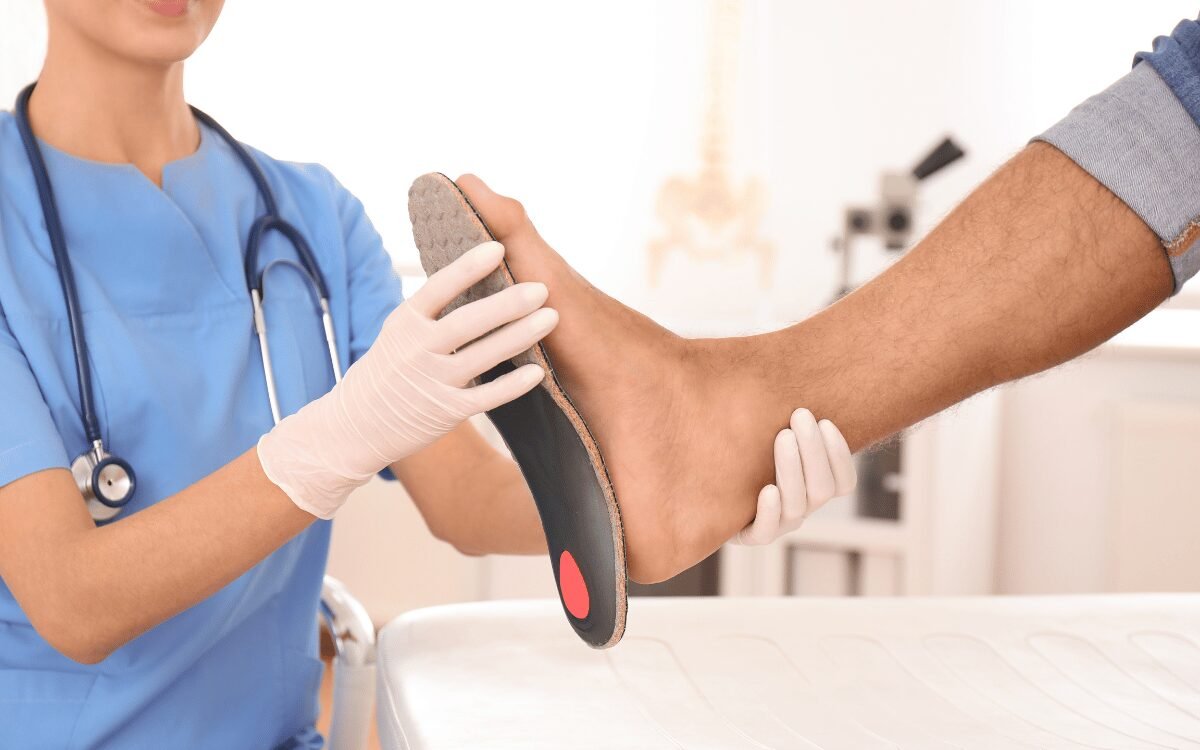
Custom orthotics are specialized medical devices worn inside shoes to correct biomechanical foot issues. Podiatrists prescribe these inserts based on precise measurements, and they differ from over-the-counter shoe insoles. They consist of highly durable materials designed to withstand daily wear and tear.
These devices align the foot properly, distributing pressure evenly across the plantar surface. Over-the-counter options offer basic cushioning, but custom orthotics address specific clinical diagnoses. Patients receive devices fabricated specifically for their unique anatomical structures.
How Do They Work?
Custom orthotics work by altering the angles at which the foot strikes the ground. They support the arches during weight-bearing activities. This support reduces excessive strain on the surrounding ligaments, and the devices control abnormal motion to facilitate a more efficient gait cycle.
Proper alignment at the foot level affects the lower-extremity chain. Correcting foot posture helps relieve stress on the knees, and it can also alleviate tension in the hips and lower back. The orthotics act as a functional foundation to improve overall body mechanics.
These prescription inserts redistribute the body’s weight across the entire foot surface. High-pressure areas receive relief, and this redistribution helps prevent callus formation and localized tissue breakdown. By optimizing load transfer, the devices decrease the muscular fatigue associated with prolonged standing or walking.
What Do They Treat?
Podiatrists utilize custom orthotics to manage a wide variety of musculoskeletal conditions. These devices commonly treat plantar fasciitis, and they also provide relief for severe flat feet or high arches. Medical professionals prescribe them for diabetic foot management to prevent dangerous ulcerations. Other applications include correcting gait abnormalities and supporting the healing process after foot surgery.
What Does the Process Involve?
The process begins with a comprehensive biomechanical examination by a licensed podiatrist. The clinician assesses the patient’s gait, and they evaluate the range of motion in the lower-extremity joints. This clinical assessment identifies the specific structural abnormalities contributing to the patient’s discomfort.
After the physical examination, the podiatrist captures a precise three-dimensional image or physical mold of the feet. A specialized laboratory uses these exact measurements to manufacture the orthotics. The final product consists of targeted supportive materials, and the fabrication process takes several weeks to guarantee precise clinical specifications. The patient returns for a fitting appointment to verify proper alignment and shoe compatibility.
What Are the Benefits?
Custom orthotics provide targeted relief for specific structural deficiencies in the foot and ankle. They offer superior durability compared to generic insoles, and patients may use a single pair for several years. They may improve lower-limb function, enhancing quality of life.
These devices prevent further joint deterioration by controlling abnormal mechanical forces. Patients experience increased mobility, and they may report decreased localized pain. By addressing the root cause of the discomfort, orthotics facilitate long-term orthopedic health.
Alleviate Foot Discomfort Today
Custom orthotics are an effective clinical intervention for chronic foot and lower extremity pain. They correct underlying biomechanical faults; this correction may improve daily function and mobility. Schedule a consultation with a podiatrist today to discuss custom orthotic solutions for your specific clinical needs.