


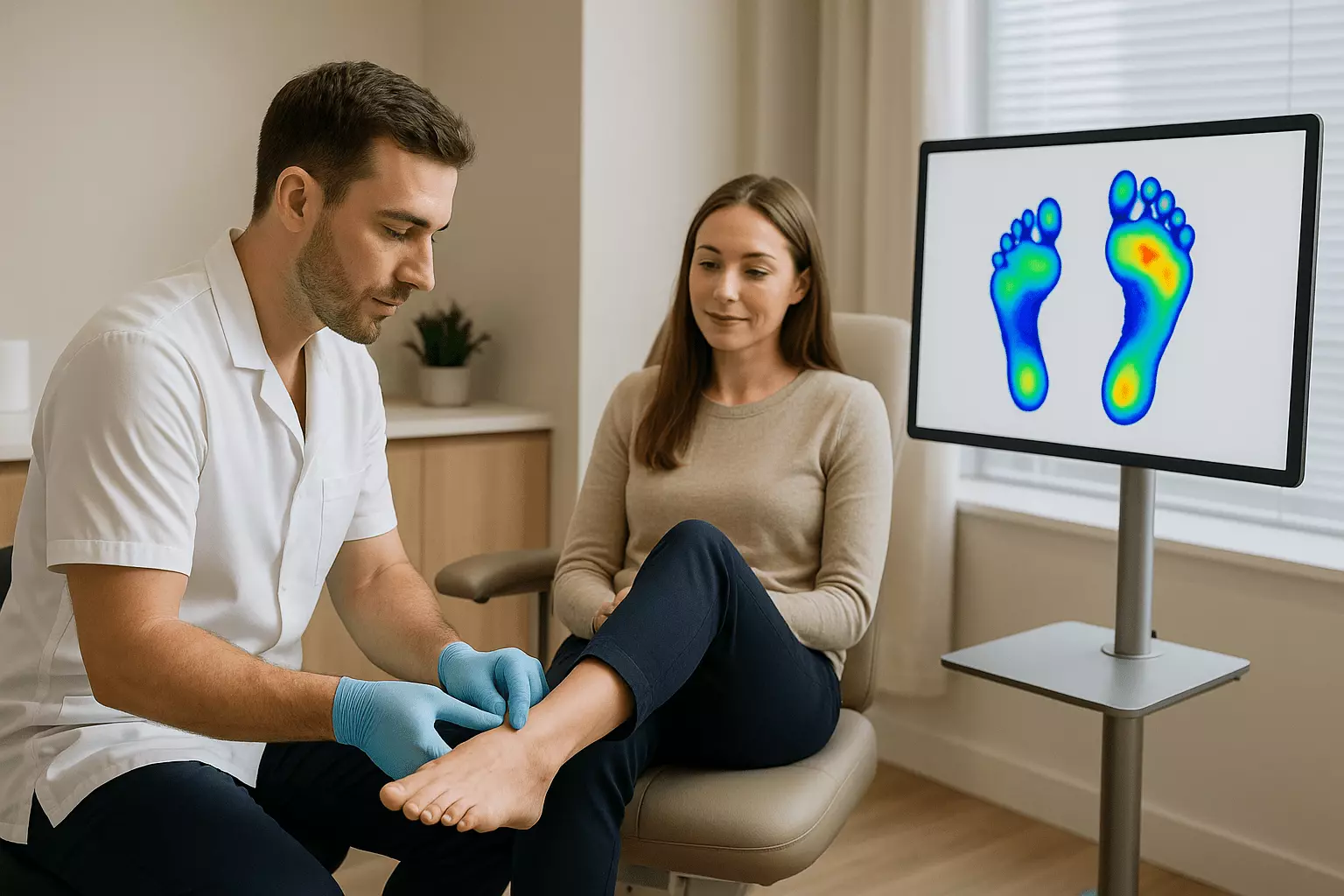
Running places repeated stress on the feet, ankles, and lower limbs, making proper foot function fundamental for performance and injury prevention. A podiatrist assesses gait patterns, foot structure, and existing discomfort to identify issues that may be limiting efficiency or increasing the risk of injury. Here’s a closer look at how a podiatrist can improve your running performance:
Evaluating Running Mechanics
Before recommending any treatment or support, a podiatrist will assess how you run. A thorough evaluation typically includes:
- Gait analysis: The podiatrist watches how you walk or run, looking for irregular patterns in how your foot lands, rolls, and pushes off the ground.
- Foot structure assessment: They examine the shape of your foot, including your arch height, to see how it may affect your stride.
- Range-of-motion testing: This assesses how well your ankle, heel, and toe joints move, which directly affects your running mechanics.
- Strength and flexibility evaluation: Muscle weakness or tightness in your feet and lower legs affects your running, so this step helps identify imbalances.
- Footwear review: The podiatrist may also assess your current running shoes to determine whether they provide the right support for your foot type.
These findings give the podiatrist a clear picture of your movement patterns, which guides all further recommendations.
Treating Injuries
Runners frequently deal with foot and ankle problems, and they often stem from mechanics. A podiatrist diagnoses and manages a range of running-related conditions. Plantar fasciitis causes sharp heel pain, especially in the morning or after long runs. The plantar fascia is a thick band of tissue on the bottom of the foot, and repeated strain can inflame it. A podiatrist identifies whether your foot structure or gait is contributing to the problem.
Achilles tendon issues are also often common among runners. The Achilles connects the calf muscle to the heel bone, and it takes on significant load with every step. Tendonitis, inflammation of the tendon, develops when that load exceeds what the tissue can handle. It often occurs due to a sudden increase in mileage or poor foot mechanics.
Supporting Performance
After evaluating your mechanics and addressing injuries, a podiatrist may recommend specific tools or therapies to support your performance. These typically include:
- Custom orthotics: These are shoe inserts that correct alignment, redistribute pressure, and improve foot function during a run.
- Footwear guidance: A podiatrist can recommend shoe types that match your arch profile and gait pattern, reducing injury risk and improving comfort.
- Stretching and strengthening programs: Targeted exercises for the feet and lower legs can improve flexibility and stability, making your stride more efficient.
- Physical therapy referrals: For complex mechanical issues, a podiatrist may coordinate care with a physical therapist to address muscle imbalances.
Each recommendation aims to help you run with less strain and more efficiency.
Preventing Long-Term Injuries
Preventive care is one of the valuable things a podiatrist can offer a runner. One key strategy is scheduling a biomechanical review before problems develop. A podiatrist can identify early signs of overuse or structural vulnerability, giving you the chance to make adjustments before an injury forces you to stop training.
Footwear management also plays a fundamental role in prevention. Running shoes wear down over time, and worn-out shoes lose their ability to absorb impact correctly. A podiatrist can help you track when shoes need replacing and which features to look for based on your foot mechanics.
Consult a Podiatrist Today
Maintaining healthy feet is key for any runner aiming to avoid injuries and enhance performance. Key strategies include wearing appropriate footwear suited to your foot mechanics, performing exercises to strengthen the foot muscles, and regularly monitoring your foot health. Contact a qualified podiatrist in your area to schedule your consultation today.



Leave a Reply