


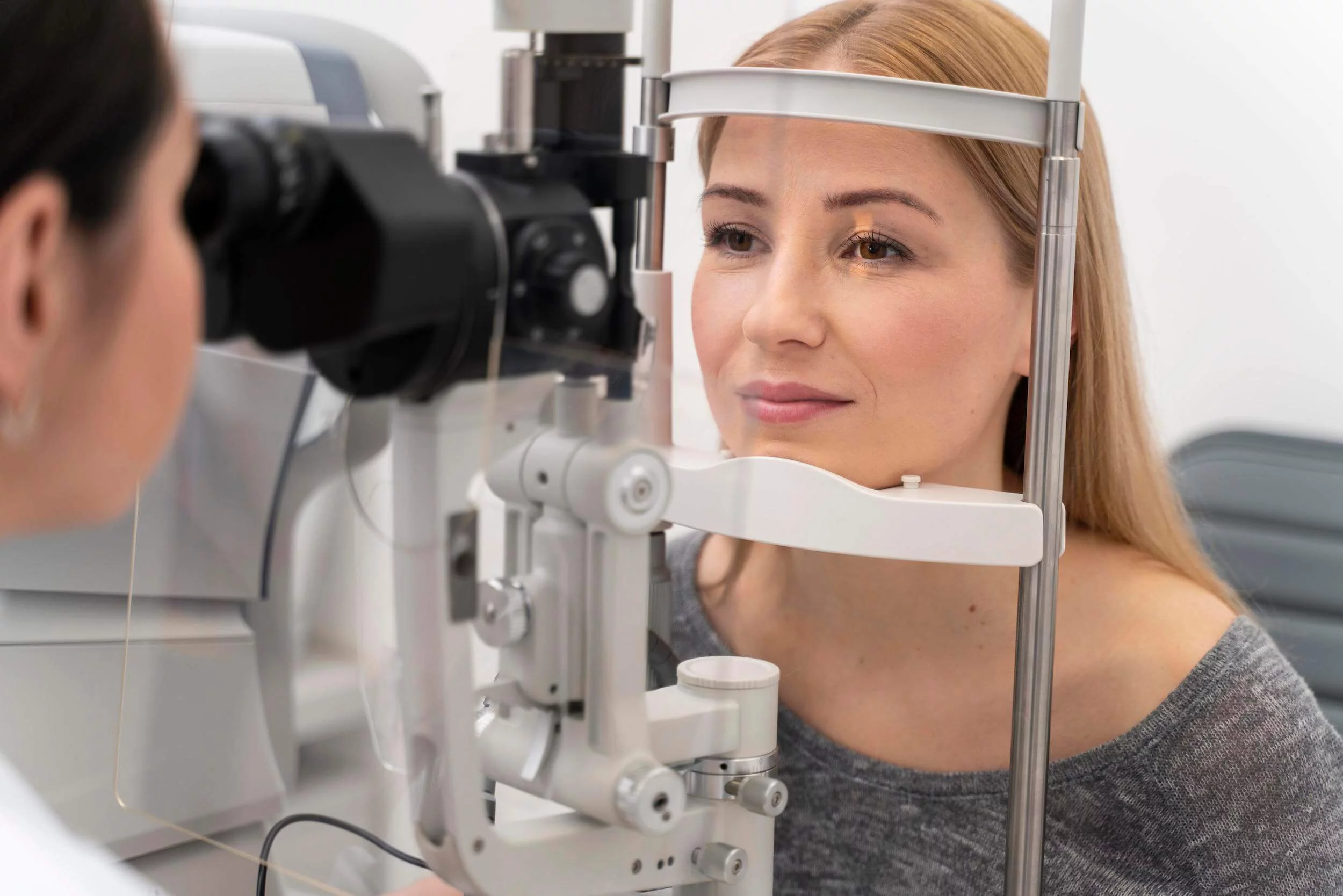
LASIK is a surgical procedure that corrects nearsightedness, farsightedness, and astigmatism. The surgery uses lasers to reshape the cornea, and it is performed on an outpatient basis without a scalpel. Although traditional methods used blades to create corneal flaps, modern techniques rely on lasers, and the flap repositions naturally after surgery, allowing for faster visual recovery. Patients often experience clearer vision, and many reduce their dependence on glasses or contact lenses.
Monovision and Presbyopia
Standard LASIK corrects distance and intermediate vision errors. Presbyopia requires specialized treatment, and monovision LASIK adjusts one eye for distance and the other for near vision. Clinicians evaluate each patient for monovision suitability, and they balance prescription levels while considering individual visual goals to achieve functional vision at multiple ranges. Monovision LASIK requires careful planning. Patients receive guidance on how their brain will adapt to two focal points, and clinicians monitor progress during follow-up visits. Adjustment may take several weeks, but successful patients achieve functional vision at all distances, and many reduce their reliance on reading glasses.
Procedure Mechanics and Alternatives
During LASIK, the ophthalmologist creates a corneal flap. An excimer laser reshapes the underlying tissue, and the flap is repositioned at the end of surgery. Although it usually heals without stitches, patients follow a post-operative care plan and attend follow-up visits to monitor healing and visual clarity. Not all patients qualify for LASIK. Thin corneas or extreme prescriptions may require alternatives, and PRK reshapes the cornea without creating a flap. Implantable contact lenses are another option for severe nearsightedness, and clinicians evaluate corneal thickness, prescription range, and lifestyle needs to select the safest and most effective procedure.
A consultation determines LASIK suitability. Clinicians assess corneal thickness, eye health, and prescription stability. Candidates generally have healthy corneas and prescriptions within the accepted range, and when LASIK is not an option, alternatives such as PRK or implantable lenses provide safe and effective correction while maintaining proper visual function.
Advances in LASIK Technology
Recent advancements have improved LASIK precision. Bladeless LASIK uses lasers to create the corneal flap; this eliminates the need for surgical tools while reducing complications. The VisX Excimer laser reshapes the cornea with high accuracy, and these innovations improve both safety and consistency of visual outcomes. Specialized techniques like monovision LASIK address presbyopia. Patients achieve functional vision at multiple distances without reading glasses; clinicians assess individual needs while tailoring treatment plans to match prescription ranges. This approach provides personalized solutions for unique vision requirements.
Find a Clinic
LASIK reshapes the cornea to correct refractive errors. It reduces reliance on glasses or contact lenses; techniques like monovision adjust one eye for distance and the other for near vision. The procedure uses laser energy to modify corneal tissue; consultations verify that patients are suitable candidates. When LASIK is not appropriate, alternative procedures provide safe and effective vision correction; clinicians guide patients toward the procedure that best matches their eye anatomy and prescription needs. LASIK can be beneficial for many people seeking better vision. Find a clinic in your area to get started today.



Leave a Reply