

Key Takeaways
- Full-arch implant care begins with a detailed assessment of the mouth, jawbone, health history, and treatment goals.
- Digital imaging and scans can help the dental team evaluate anatomy and plan the future smile and bite.
- Temporary teeth may be possible on the day of surgery, but they are not appropriate for every patient and are not guaranteed.
- Patients should ask about healing, materials, maintenance, risks, follow-up visits, and all anticipated costs.
- Daily cleaning and regular professional maintenance are important for protecting implant-supported teeth and surrounding tissues.
For people in Sacramento, California, who are living with extensive tooth loss, failing teeth, or unstable dentures, full-arch treatment can feel like a major decision. Exploring full arch implants in Sacramento starts with understanding that the process is not a one-visit solution for every patient. A safe, useful plan considers oral health, bone support, medical history, bite, comfort, and long-term goals.
Whether a patient is preparing for retirement, returning to social events around Midtown, or simply hoping to eat and speak with more confidence, expectations should be realistic from the beginning. Treatment may involve several stages, including diagnostics, preparation, implant surgery, healing, temporary teeth when appropriate, and a final restoration.
Why Careful Planning Matters Before Full-Arch Treatment
Full-arch dental implants are not one-size-fits-all. A patient may need infected teeth removed, gum disease treated, or bone support evaluated before implants can be placed. A thorough plan also accounts for teeth grinding, smoking or tobacco use, medications, chronic health conditions, dental anxiety, and sedation needs.
Planning should begin with the end result in mind. The desired position of the final teeth affects implant placement, lip and facial support, speech, bite balance, and the ability to clean beneath the restoration. The American Dental Association explains that implants act as anchors for replacement teeth and that healing around an implant can take time before the permanent restoration is placed.
What Happens During the First Consultation?
The initial visit should be a fact-finding appointment, not a rushed decision. The dental team may examine existing teeth and gums, review X-rays or scans, discuss medical and dental history, and ask what a patient hopes to improve. Chewing comfort, appearance, speech, denture stability, and the ability to maintain the restoration all matter.
Patients should be honest about medications, past radiation therapy, diabetes management, tobacco use, clenching, and previous dental problems. These details can affect surgical planning and healing. Only a qualified dental professional can determine whether full-arch implants are suitable for an individual patient.
How Digital Imaging Supports the Plan
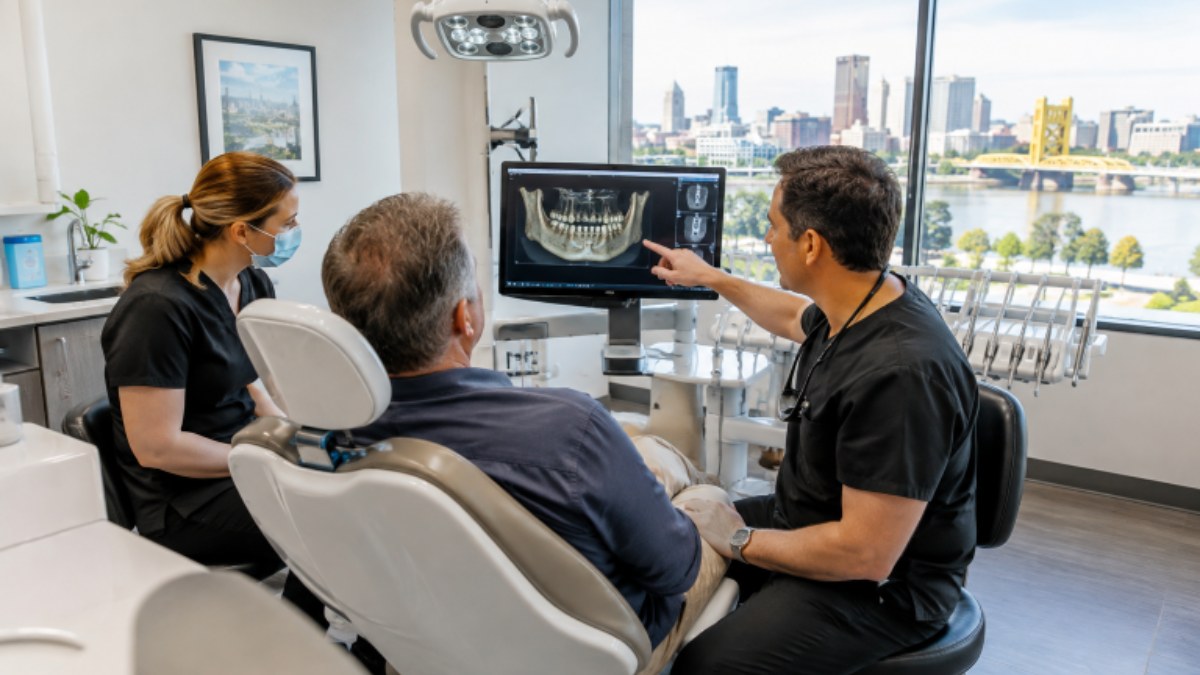
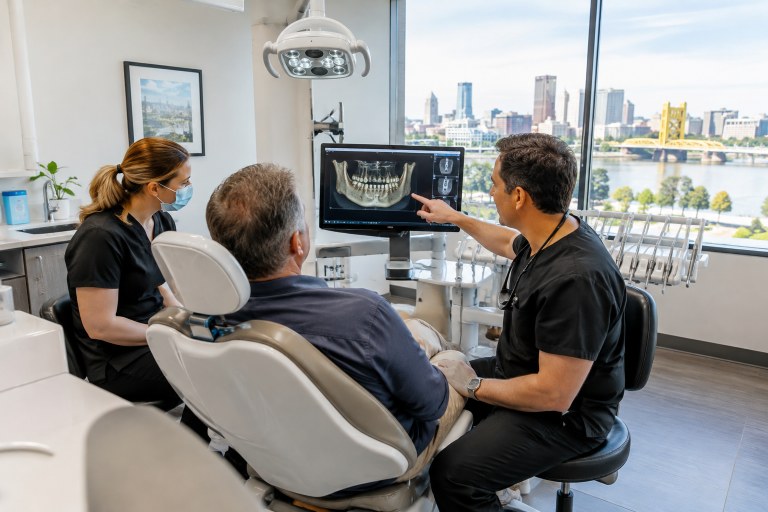
Three-dimensional imaging can help clinicians assess jawbone shape and volume, identify important anatomical structures, and evaluate areas that may need additional attention. Digital impressions can also help the team plan the size, shape, and position of the future teeth before surgery.
Digital tools can make communication more visual for patients, but they do not replace clinical judgment. The provider still needs to evaluate gum tissue, bone quality, bite forces, medical risks, and the practical details of cleaning the finished restoration.
Why the Final Teeth Should Be Considered Early
Implants are the foundation, but the visible teeth are the part a patient uses every day. When the final restoration is considered early, the surgical and restorative phases can support one another. This helps the team plan for a bite that feels stable, a smile that fits the face, and contours that allow for hygiene access.
Without restorative planning, implants may be positioned in a way that makes the final teeth harder to clean or less comfortable to bite with. Patients can ask to see how the proposed temporary and final teeth may differ in materials, shape, thickness, and appearance.
What to Expect on the Day of Surgery
Each case is different, but treatment day commonly includes a final health review, anesthesia or sedation preparation, removal of teeth when necessary, implant placement, and post-operative instructions. A temporary fixed restoration may be attached when the clinical situation supports it.
Same-day temporary teeth are not guaranteed. The decision can depend on implant stability, bone condition, infection control, the patient’s health, and the planned bite. Patients should arrange transportation if sedation is used and follow the team’s instructions about medications, food, and recovery.
Healing, Temporary Teeth, and Final Teeth
During healing, the jawbone and soft tissues need time to recover around the implants. Temporary teeth can help restore appearance and limited function during this stage, but patients may need to follow a soft-food diet and avoid placing excessive force on the restoration.
Follow-up appointments allow the dental team to monitor healing, make adjustments, and determine when final teeth can be made. The final restoration may use different materials from the temporary version and is designed for the patient’s established bite and tissue contours.
Questions to Ask Before Choosing a Plan
- How many appointments and treatment stages are expected?
- Will extractions, bone grafting, or gum treatment be needed?
- Is a temporary restoration planned, and what limitations will it have?
- What foods should be avoided during healing?
- What symptoms require an urgent call to the dental office?
- What material is proposed for the final restoration?
- How will the area beneath the restoration be cleaned?
- Which fees are included, and which services could create additional costs?
Risks and Long-Term Maintenance
Like other surgical and restorative procedures, full-arch implant treatment has risks. These can include swelling, discomfort, infection, healing complications, implant failure, bite concerns, gum changes, or damage to the restoration. Smoking, uncontrolled health conditions, poor home care, and missed maintenance visits can also affect outcomes.
Implants do not develop cavities, but the gum and bone around them still require attention. A routine often includes brushing twice daily, cleaning beneath the restoration with tools recommended by the dental team, and attending regular examinations. The ADA recommends daily cleaning between teeth or around dental work and avoiding tobacco as part of an individualized oral-care routine.
Cost Questions Sacramento Patients Should Raise
Estimates for full-arch treatment can vary because each plan can include different services. Costs may involve imaging, extractions, implants, bone procedures, sedation, temporary teeth, laboratory work, final materials, and maintenance appointments. Request a written treatment plan that clearly explains what is included and how future repairs are handled.
Conclusion
Full-arch dental implant treatment is best viewed as a connected process rather than a single procedure. Sacramento patients who understand the diagnostic, surgical, restorative, healing, and maintenance stages can ask stronger questions and make choices that support comfort, function, appearance, and long-term oral health.
- Full-Arch Dental Implant Planning: What Sacramento, California Patients Should Know
- How To Build Safer, More Useful Personal Care Products
- How to Prepare for an IV Hydration Appointment in Asbury Park, New Jersey
- How to Compare Senior Living Options in Visalia, California
- How to Plan a Focused Supplement Product Line