


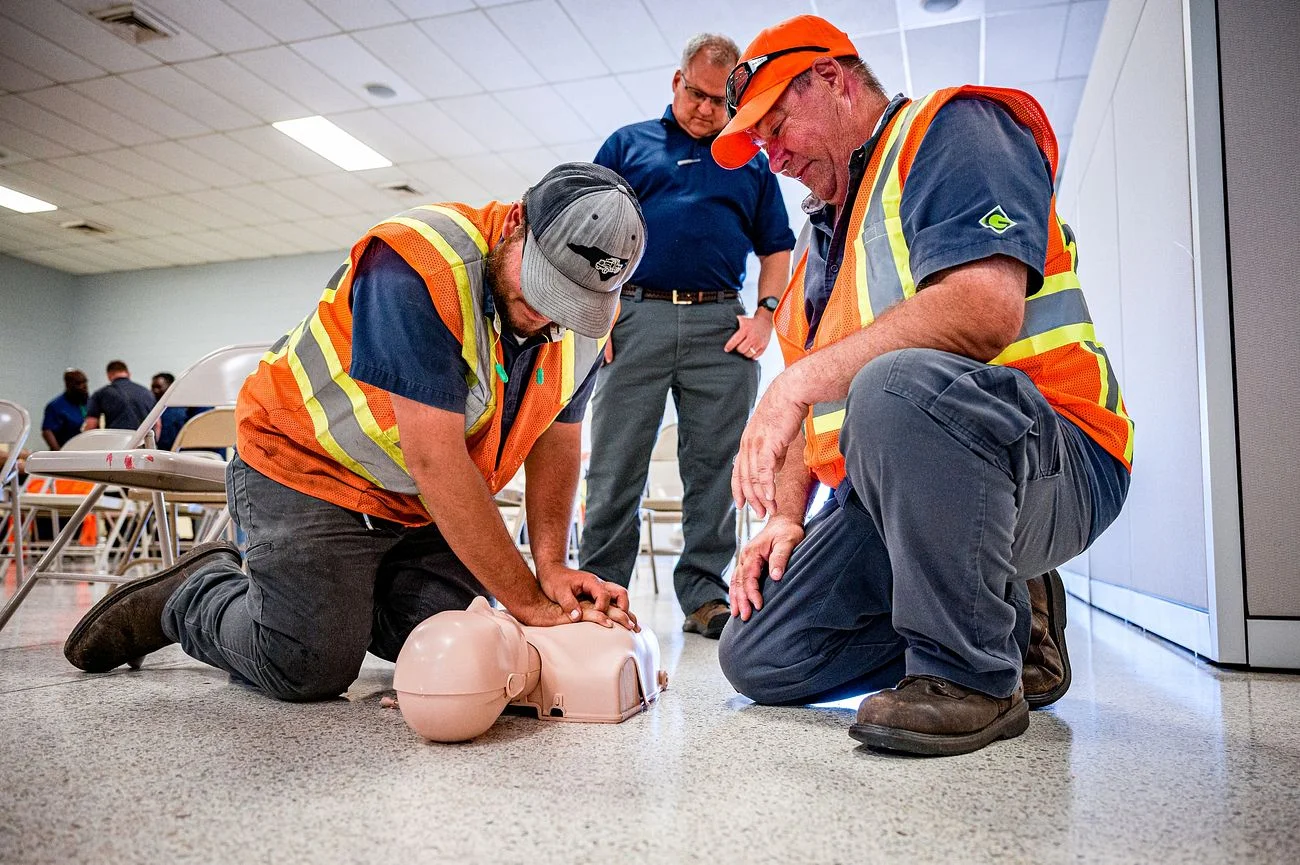
A CPR certification course equips you with the skills to respond effectively during cardiac arrest or other life-threatening emergencies. You learn how to deliver rescue breaths in cases such as drowning or when a person becomes unresponsive and stops breathing. While waiting for professional medical responders, you can apply these skills to take quick, informed action. Here are the key skills to learn in your CPR certification course:
Chest Compression and Rescue Breathing Skills
Students practice proper hand placement on the sternum, maintain the correct compression depth, and keep a steady rhythm while allowing full chest recoil. They also focus on minimizing interruptions in compressions, delivering effective rescue breaths, and opening the airway correctly. These techniques help you maintain an open airway, deliver effective breaths, and apply the correct compression-to-breath ratio. CPR helps maintain blood flow and oxygen to the brain and vital organs until a defibrillator or emergency team can restore normal heart rhythm.
Automated External Defibrillator Use
To improve survival chances before emergency personnel arrive, students learn how to turn on the automated external defibrillator (AED), expose and prepare the chest, and apply the pads correctly. The AED automatically analyzes the heart rhythm and provides clear visual or voice prompts to guide the rescuer. You also learn how to connect the pads to the AED and follow its visual and voice instructions safely. Training emphasizes staying clear during shock delivery and avoiding contact with the patient to prevent accidental injury.
Assessment and Recognition Skills
Students learn to check responsiveness by shouting and tapping the person’s shoulder. They also practice recognizing when to call for emergency medical services and when to start CPR. By knowing how to feel, listen, and look for standard breathing patterns, students understand how to quickly recognize cardiac or respiratory arrest.
Other signs that students taking a CPR certification course learn to look for include unresponsiveness, no normal breathing, or occasional gasping. Recognizing these indicators helps determine when CPR and AED use are necessary. They also learn how to evaluate pulse and circulation, as well as assess complete or partial airway obstruction. Students also learn to prioritize actions when more than one person needs help. They should focus first on individuals who are unresponsive and not breathing.
Airway Maintenance and Ventilation Techniques
Students learn to check for normal breathing within a few seconds and clear visible obstructions from the mouth. Training emphasizes maintaining an open airway to allow oxygen to reach the lungs. Oxygen delivery is achieved by lifting the chin and tilting the head to open the airway properly while minimizing spinal injury risk.
They practice tilting the head and lifting the chin to open the airway while minimizing neck movement. Students also learn to deliver effective rescue breaths using the mouth-to-mouth method or a barrier device. The course also exposes students to manual resuscitators that can be used for safe ventilation. Other skills they learn include how to properly use an airway adjunct while minimizing the risk of aspiration. Practicing these proper techniques in a course setting can help simplify the practice during an actual emergency.
Enroll in a CPR Certification Course
A CPR certification course teaches you how to perform effective chest compressions, maintain an open airway, and provide rescue breaths to help maintain oxygen flow to the brain. You’ll also learn to recognize cardiac arrest and contact emergency medical services quickly. These skills are useful in emergencies such as choking or sudden collapse during physical activity. They are not only beneficial for medical care professionals, but may help teachers, parents, and more. Enroll in a CPR certification course to strengthen your emergency response skills.
- Questions to Ask Before Joining a Clinical Study
- A Clear Guide to Choosing and Preparing for a Cancer Clinical Trial
- Choosing Adult Autism Residential Support: A Practical Guide to Daily Life, Safety, and Independence
- Clinical Trial Phases: What Each Stage Means for Participants and Patients
- Clinical Trials: Important Facts Before Patient Participation


